Physical Address
304 North Cardinal St.
Dorchester Center, MA 02124
Physical Address
304 North Cardinal St.
Dorchester Center, MA 02124
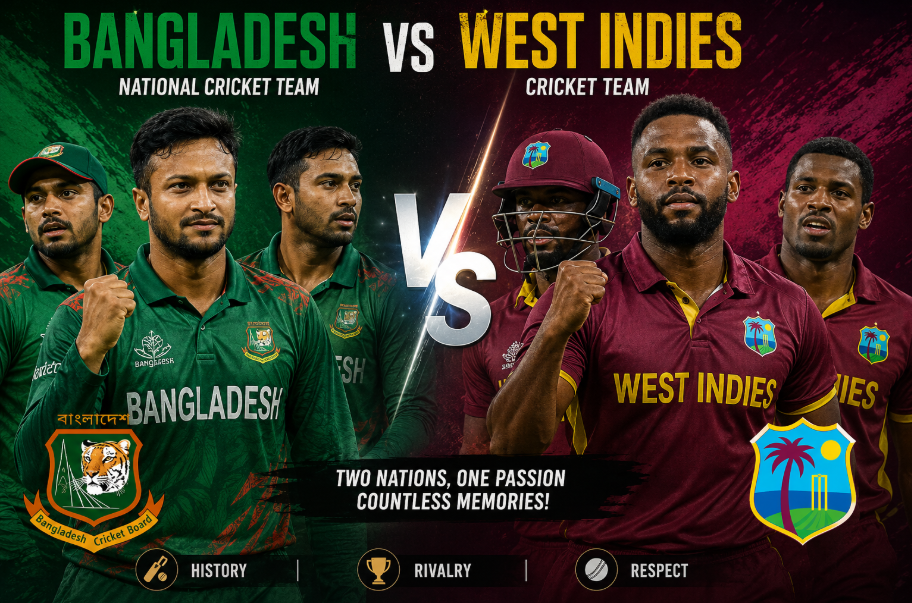
The Bangladesh National Cricket Team vs West Indies Cricket Team rivalry has evolved from a one-sided contest into a far more competitive cricket timeline shaped by shifting eras, changing formats, and growing cricketing confidence from both sides. In the early years, West Indies carried their legacy of explosive batting and world dominance, while Bangladesh struggled to find consistency on the international stage. Over time, however, the gap began to close as Bangladesh developed stronger spin attacks, improved batting depth, and better tactical awareness. This rivalry is not just about wins and losses but about progression, pride, and defining moments that reshaped how both teams approach each other across ODIs, Tests, and T20Is.
| Date | Format | Venue | Winner | Margin |
|---|---|---|---|---|
| 31 Oct 2025 | T20I | Mirpur, Bangladesh | West Indies | 5 wickets |
| 29 Oct 2025 | T20I | Mirpur, Bangladesh | West Indies | 14 runs |
| 27 Oct 2025 | T20I | Mirpur, Bangladesh | West Indies | 16 runs |
| 23 Oct 2025 | ODI | Mirpur, Bangladesh | Bangladesh | 179 runs |
| 21 Oct 2025 | ODI | Mirpur, Bangladesh | West Indies | Super Over |
| 18 Oct 2025 | ODI | Mirpur, Bangladesh | Bangladesh | 74 runs |
| Format | Total Matches | West Indies Wins | Bangladesh Wins | No Result / Draw |
|---|---|---|---|---|
| Test | 22 | 14 | 5 | 3 |
| ODI | 47 | 24 | 21 | 2 |
| T20I | 19 | 12 | 6 | 1 |
| Total | 88 | 50 | 32 | 6 |
| Milestone / Record | Player | Team | Figures / Score | Match Date |
|---|---|---|---|---|
| Highest Test Score | Ramnaresh Sarwan | West Indies | 261 | 4 Jun 2004 |
| Highest ODI Score | Tamim Iqbal | Bangladesh | 130 | 22 Jul 2018 |
| Best Test Bowling | Mehidy Hasan Miraz | Bangladesh | 7/58 | 30 Nov 2018 |
| Best ODI Bowling | Kemar Roach | West Indies | 5/32 | 26 Jul 2018 |
| Best T20I Bowling | Shakib Al Hasan | Bangladesh | 5/20 | 20 Dec 2018 |
| Category | Format | Match / Venue | Deciding Margin | Winner |
|---|---|---|---|---|
| Biggest Win (Runs) | Test | Mirpur (2018) | Innings and 184 runs | Bangladesh |
| Biggest Win (Runs) | ODI | Mirpur (2025) | 179 runs | Bangladesh |
| Biggest Win (Runs) | T20I | Arnos Vale (2024) | 80 runs | Bangladesh |
| Closest Match (Runs) | Test | Mirpur (2021) | 17 runs | West Indies |
| Closest Match (Tie) | ODI | Mirpur (2025) | Super Over | West Indies |
| Closest Match (Runs) | T20I | Sharjah (2021) | 3 runs | West Indies |
The early meetings between Bangladesh and West Indies set the tone for a rivalry shaped by contrast. West Indies entered with a legacy of power hitting, fast bowling depth, and global dominance, while Bangladesh were still finding their footing in international cricket. In these initial clashes, West Indies largely controlled the tempo with aggressive batting at the top and disciplined pace attack. Bangladesh, however, began showing signs of resilience through small partnerships and improving spin options. Even when results went against them, Bangladesh slowly reduced margins of defeat, which hinted at a shifting balance. Fans from both sides started noticing that Bangladesh were no longer an easy opponent. These early games built the emotional foundation of a rivalry that would grow more competitive over time.
| Season | Match | Score | Winner | Key Performance |
|---|---|---|---|---|
| 2002-05 | ODI Series | WI 3-0 BAN | West Indies | Gayle dominant batting |
| 2003 | Test Match | WI won | West Indies | Pace attack control |
| 2004 | ODI Clash | WI won | West Indies | Middle order strength |
| 2005 | ODI Series | WI 2-1 BAN | West Indies | Bangladesh improved spin |
The 2007 World Cup marked a psychological turning point in the Bangladesh and West Indies rivalry timeline. Bangladesh entered the tournament as underdogs but quickly disrupted expectations with disciplined bowling and fearless batting. West Indies, despite their experience, struggled with inconsistency and failed to dominate as expected. The match between these two sides reflected a shift in global cricket perception, as Bangladesh played with confidence and structure. Their top order showed patience while the bowlers executed tight lines under pressure. West Indies still relied on explosive talent, but lack of partnerships cost them crucial momentum. This era made the cricket world realize that Bangladesh were evolving into a serious competitive side capable of challenging established teams like West Indies on big stages.
| Season | Match | Score | Winner | Key Performance |
|---|---|---|---|---|
| 2007 | World Cup Group | BAN vs WI | Bangladesh | All-round discipline |
| 2007 | ODI Clash | BAN 4 wickets | Bangladesh | Middle order stability |
| 2007 | Tournament Run | Mixed | Bangladesh | Team balance improved |
| 2007 | WI Campaign | Inconsistent | Bangladesh | Bowling pressure failure |
During the early bilateral series phase, West Indies maintained clear dominance over Bangladesh in most formats. Their batting lineup, powered by aggressive stroke makers, consistently put pressure on Bangladesh bowlers. Players like Chris Gayle and other top-order hitters often changed matches within the first 15 overs. Bangladesh struggled to contain the scoring rate on flat pitches and relied heavily on spin to create breakthroughs. Despite occasional resistance, they lacked finishing strength in chasing targets. However, Bangladesh’s home advantage began to play a role in narrowing the gap slightly. These series were crucial in building Bangladesh’s exposure to high-intensity cricket. The scorecards from this period reflect West Indies control but also Bangladesh’s gradual improvement in handling pressure situations.
| Season | Match | Score | Winner | Key Performance |
|---|---|---|---|---|
| 2008 | ODI Series | WI 3-0 BAN | West Indies | Gayle explosive starts |
| 2009 | T20 Match | WI won | West Indies | Power hitting dominance |
| 2010 | ODI Series | WI 2-1 BAN | West Indies | Bangladesh fightback |
| 2011 | ODI Clash | WI won | West Indies | Bowling depth advantage |
A major shift in the Bangladesh and West Indies timeline came when Bangladesh started achieving breakthrough victories in away conditions. Winning in the Caribbean was once considered highly unlikely, but Bangladesh changed that narrative with improved bowling discipline and smarter batting rotations. Spin bowlers played a critical role in restricting West Indies’ aggressive lineup. At the same time, emerging Bangladeshi batters showed maturity in chasing or building totals under pressure. West Indies, on the other hand, struggled with inconsistency in middle order partnerships, which allowed Bangladesh to capitalize. These away wins were not just statistical victories but emotional milestones for Bangladesh cricket fans. The scorecards from these matches reflect tighter margins and growing competitiveness between both teams across conditions.
| Season | Match | Score | Winner | Key Performance |
|---|---|---|---|---|
| 2012 | ODI in WI | BAN won | Bangladesh | Spin control |
| 2014 | T20 Clash | BAN won | Bangladesh | Chase stability |
| 2015 | ODI Series | 2-2 draw | Draw | Balanced contest |
| 2016 | Test/ODI mix | BAN competitive | Bangladesh | Batting maturity |
The arrival of T20 cricket completely transformed the Bangladesh and West Indies rivalry. West Indies leaned heavily into their natural strength of explosive batting and big six hitting, while Bangladesh built a more disciplined approach centered on bowling variations and tight fielding. Matches often swung within a few overs due to aggressive intent from both sides. Leaders like Shakib Al Hasan brought tactical awareness that helped Bangladesh stay competitive even against powerful West Indies lineups. However, West Indies still held the edge in finishing games with brute force batting in death overs. This era produced some of the most entertaining encounters, with close finishes becoming common. The scorecards reflect high run rates, frequent momentum shifts, and growing tactical maturity from Bangladesh.
| Season | Match | Score | Winner | Key Performance |
|---|---|---|---|---|
| 2016 | T20 Series | WI 2-1 BAN | West Indies | Big hitting finish |
| 2017 | T20 Clash | WI won | West Indies | Death overs hitting |
| 2018 | T20 Series | BAN 2-1 WI | Bangladesh | Bowling discipline |
| 2019 | T20 Match | WI won | West Indies | Explosive top order |
The full timeline of Bangladesh vs West Indies reflects a rivalry that has transformed through resilience, adaptation, and evolving cricket philosophies. West Indies once dominated with power and experience, but Bangladesh gradually challenged that superiority with disciplined bowling, strategic batting, and fearless performances in crucial matches. From early heavy defeats to historic wins and closely fought T20 battles, the journey highlights how competitive balance in modern cricket is constantly shifting. Today, this rivalry stands as a symbol of how emerging teams can rise through persistence and planning, turning once predictable fixtures into unpredictable and emotionally charged encounters that continue to excite fans on both sides.