Physical Address
304 North Cardinal St.
Dorchester Center, MA 02124
Physical Address
304 North Cardinal St.
Dorchester Center, MA 02124
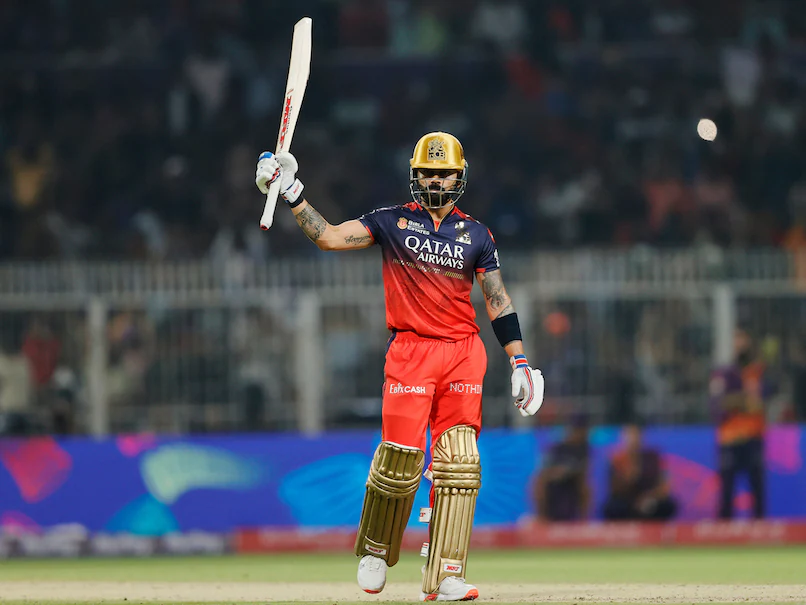
The Kolkata Knight Riders vs Royal Challengers Bengaluru timeline is one of the most interesting historical matchups in the Indian Premier League (IPL). Since their first meeting in 2008, these two franchises have produced record-breaking performances, dramatic finishes, dominant victories, and unforgettable individual displays.
Kolkata Knight Riders (KKR), commonly known for their purple and gold colours, have built a reputation for tactical cricket, powerful batting, and effective spin bowling. Royal Challengers Bengaluru (RCB), formerly known as Royal Challengers Bangalore, have attracted enormous attention through their star players, aggressive batting style, and passionate supporters.
The rivalry began with the very first match of the inaugural IPL season on 18 April 2008. That game immediately established a remarkable standard when KKR posted a huge total and defeated RCB by 140 runs. Brendon McCullum’s extraordinary innings became one of the defining moments in IPL history.
Over the years, the balance between the teams has shifted several times. KKR enjoyed dominant periods, particularly in 2012, 2014, 2017, 2023, and 2024, while RCB recorded strong winning runs in seasons such as 2009, 2011, 2015, and 2020. Their meetings in 2025 and 2026 added further chapters to this competitive contest.
This article explores the Kolkata Knight Riders vs Royal Challengers Bengaluru timeline, important match results, historical milestones, head-to-head records, memorable performances, and the factors that make this IPL fixture so exciting.
The overall head-to-head record provides a useful starting point for understanding the rivalry. Through their latest meeting on 13 May 2026, the teams had played 37 matches, including one abandoned game. KKR had won 20 matches, while RCB had won 16, with one match producing no result.
| Head-to-head statistic | Record |
|---|---|
| Total matches | 37 |
| Kolkata Knight Riders wins | 20 |
| Royal Challengers Bengaluru wins | 16 |
| No result | 1 |
| First meeting | 18 April 2008 |
| Latest meeting covered | 13 May 2026 |
| Biggest winning margin by runs | KKR by 140 runs |
| Memorable opening-era performance | Brendon McCullum’s 158 not out |
Note: These figures cover IPL meetings through 13 May 2026. Historical results include matches played when RCB was known as Royal Challengers Bangalore.
KKR’s advantage reflects their ability to produce decisive performances across different IPL eras. Their victories have included high-scoring batting displays, effective bowling spells, and successful chases under pressure.
RCB, however, have repeatedly demonstrated that the rivalry can change direction quickly. Their victories show that historical records do not necessarily predict the outcome of the next match.
The following timeline highlights significant seasons and matches that have shaped this rivalry. It focuses on major turning points rather than listing every individual fixture.
| Year | Important development | Result or significance |
|---|---|---|
| 2008 | Historic first IPL match | KKR won by 140 runs |
| 2009 | RCB responded strongly | RCB won both league meetings |
| 2010 | Teams shared the season’s honours | One win each |
| 2011 | RCB dominated the matchup | RCB won both meetings |
| 2012 | KKR took control | KKR won both meetings |
| 2013 | Results were shared | One win each |
| 2014 | KKR enjoyed a strong campaign | KKR won both meetings |
| 2015 | RCB regained momentum | RCB won both meetings |
| 2016 | Teams traded victories | One win each |
| 2017 | KKR dominated again | KKR won both meetings |
| 2018 | KKR won both fixtures | Two victories for KKR |
| 2019 | Teams shared the honours | One win each |
| 2020 | RCB recorded two wins | Both matches went to RCB |
| 2021 | KKR won two of three meetings | Included an Eliminator victory |
| 2022 | RCB won a close contest | RCB won by three wickets |
| 2023 | KKR swept the season’s meetings | Two wins for KKR |
| 2024 | KKR continued their dominance | Two wins for KKR |
| 2025 | RCB won one completed meeting | RCB won by seven wickets; another game was abandoned |
| 2026 | RCB won the latest meeting covered | RCB won by six wickets |
This season-by-season pattern demonstrates why the fixture remains compelling. Neither side has controlled the rivalry continuously. Instead, periods of dominance have alternated, with changes in squad composition, captaincy, playing conditions, and individual form influencing results.
The rivalry began on 18 April 2008 at the M. Chinnaswamy Stadium in Bengaluru. The match was particularly significant because it was also the opening game of the inaugural IPL season.
KKR delivered an extraordinary batting performance after being asked to bat first. Brendon McCullum played an unforgettable innings of 158 not out from 73 balls, combining powerful hitting with exceptional timing. His innings helped Kolkata reach 222/3 in 20 overs.
RCB struggled dramatically in response and were bowled out for 82. KKR secured a 140-run victory, immediately establishing one of the most memorable results in the competition’s early history.
The match was important for several reasons. First, it gave KKR a remarkable start to their IPL campaign. Second, it established McCullum’s innings as one of the tournament’s landmark performances. Finally, it gave the KKR–RCB rivalry a defining moment before the two teams had even developed a long history.
The opening match remains central to any Kolkata Knight Riders vs Royal Challengers Bengaluru timeline because few fixtures can claim such an extraordinary beginning.
After their heavy defeat in the first meeting, RCB gradually developed a stronger record against Kolkata. The 2009 season was an important step in that response, with Bengaluru winning both encounters.
In 2010, the teams shared their two league meetings. This result suggested that the contest was becoming more balanced rather than remaining defined by the opening match.
RCB’s strongest period in this early phase arrived in 2011. Bengaluru won both matches against Kolkata, demonstrating improved consistency and an ability to perform in different conditions.
These seasons established an important feature of the rivalry: a disappointing result in one year did not prevent either franchise from responding strongly in the next. Both teams repeatedly rebuilt their approach and challenged the other side.
For RCB, these early victories helped move the rivalry beyond the memory of McCullum’s historic innings. For KKR, they created the challenge of finding a more consistent formula against an opponent that had become increasingly competitive.
The 2012 season marked a significant turning point for KKR. Kolkata won both matches against RCB, including a 42-run victory in Bengaluru and a 47-run victory at Eden Gardens.
These results were particularly important because they demonstrated that KKR could succeed both at home and away. Rather than relying exclusively on the atmosphere at Eden Gardens, Kolkata produced performances capable of overcoming RCB on their own ground.
The team’s success reflected the importance of balanced cricket. Strong batting provided a foundation, while disciplined bowling helped restrict Bengaluru’s scoring opportunities. KKR’s ability to manage different phases of a T20 innings became an important part of their competitive identity.
The 2012 campaign also strengthened the association between KKR and successful team-oriented cricket. While individual performances remained important, Kolkata’s victories highlighted how coordinated batting, bowling, and fielding could decide matches against a powerful opponent.
The 2013 season produced a split result, with RCB winning one encounter and KKR winning the other. This maintained the competitive nature of the fixture and showed that neither side had established an unbreakable advantage.
The 2014 season, however, belonged to Kolkata in their head-to-head meetings. KKR defeated RCB by two runs in Sharjah on 24 April and later won by 30 runs at Eden Gardens on 22 May.
The two-run victory in Sharjah was especially memorable because of its narrow margin. In T20 cricket, a match can be decided by a single boundary, a crucial dot ball, a missed opportunity in the field, or a successful final-over delivery. Such tight results demonstrate the importance of composure during the closing stages of an innings.
Kolkata’s subsequent 30-run win showed a different route to victory. Instead of relying on a last-minute finish, the team created a more comfortable margin through a stronger overall performance.
Together, these matches illustrated KKR’s versatility and strengthened their position in the historical rivalry.
The 2015 season marked another change in the rivalry’s direction. RCB won both meetings against KKR, securing victories by three wickets in Kolkata and seven wickets in Bengaluru. These results demonstrated that Bengaluru could handle Kolkata’s bowling attack and successfully chase targets under pressure.
The following season produced a more balanced contest. In 2016, KKR won by five wickets in Bengaluru, while RCB responded with a nine-wicket victory at Eden Gardens.
RCB’s nine-wicket win was particularly impressive because it came away from their home ground. Bengaluru’s successful chase demonstrated how quickly a match could move in their favour when their top order established control.
For KKR, the victory earlier in the season showed that they remained capable of winning in Bengaluru. The contrasting results reflected a rivalry in which home advantage mattered, but did not guarantee success.
The 2015 and 2016 seasons also reinforced the importance of batting partnerships. Teams that built stable opening stands and retained wickets for the later overs often gained a decisive advantage. Against opponents with aggressive batting line-ups, controlling the middle overs and limiting scoring opportunities remained equally important.
The 2017 season stands out as one of Kolkata’s strongest periods against Bengaluru. KKR won both league meetings, including a remarkable 82-run victory at Eden Gardens on 23 April.
The match became famous for RCB’s batting collapse. Chasing a target of 132, Bengaluru were dismissed for just 49, one of the lowest totals in IPL history. Kolkata’s bowlers took advantage of the conditions and dismantled the opposition batting order.
The result was a dramatic reversal of the opening encounter from 2008. In that first game, KKR had overwhelmed RCB by 140 runs. In 2017, Kolkata again delivered a crushing defeat, this time through disciplined bowling and an extraordinary collapse rather than an enormous batting total.
The second meeting in Bengaluru also went KKR’s way, with Kolkata winning by six wickets.
These two results made 2017 a particularly important season in the Kolkata Knight Riders vs Royal Challengers Bengaluru timeline. They demonstrated how KKR could dominate both through batting strength and through a bowling attack capable of creating pressure on even experienced players.
KKR continued their strong record against RCB in 2018, winning both encounters. Kolkata won by four wickets at Eden Gardens and six wickets in Bengaluru. These victories reinforced their ability to chase targets effectively.
The 2019 season was more evenly contested. RCB won by 10 runs in Kolkata on 19 April, while KKR had earlier won by five wickets in Bengaluru on 5 April.
The 10-run result was a reminder that even a small advantage can prove decisive in a high-pressure T20 match. A team defending a target must balance attacking intent with control, particularly when the opposing batters can change the scoring rate within a few overs.
For KKR, the 2018 victories showed that their balanced approach continued to work. For RCB, the 2019 win in Kolkata provided evidence that they could overcome the challenge of playing away from home.
This period also highlighted the importance of tactical flexibility. Teams needed to adjust their batting order, bowling combinations, and field placements according to the match situation. The side that adapted more effectively often gained control during the middle and death overs.
The 2020 IPL season took place in the United Arab Emirates, creating a different setting for the rivalry. RCB won both matches against KKR, recording victories by 82 runs and eight wickets.
The first meeting, played in Sharjah on 12 October, was particularly significant. RCB scored 194/2, with AB de Villiers producing a powerful unbeaten innings of 73 from just 33 balls. KKR struggled in their chase and finished on 112/9, giving Bengaluru an 82-run victory.
The second meeting took place in Abu Dhabi on 21 October. RCB bowled KKR out for 84 and chased the target comfortably, winning by eight wickets.
These matches illustrated two different forms of dominance. In the first, Bengaluru’s batting created a substantial advantage. In the second, their bowling attack restricted Kolkata to a low total and made the chase straightforward.
The 2020 season was an important reminder that the rivalry could change quickly. KKR had enjoyed several strong years earlier in the decade, but RCB’s performances in the UAE showed that previous results offered no guarantee of future success.
The 2021 season produced three meetings between the teams, including a playoff encounter. The sides first met on 18 April, when RCB won by 38 runs.
However, KKR responded strongly in the second half of the season. On 20 September, Kolkata defeated Bengaluru by nine wickets in Abu Dhabi. KKR’s bowling attack restricted RCB to 92, and Kolkata completed the chase with seven wickets in hand.
The teams then met in the IPL Eliminator on 11 October at Sharjah. RCB scored 138/7, but KKR successfully chased the target, reaching 139/6 to win by four wickets.
The Eliminator was especially important because the stakes were higher than in a regular league fixture. The losing team would be eliminated from the tournament, while the winner would continue its playoff campaign.
Kolkata’s victory reflected their ability to handle pressure in knockout cricket. Their bowlers restricted RCB to a manageable total, and the batters maintained composure during the chase.
For RCB, the defeat was another painful playoff setback. For KKR, it became one of the defining moments in their recent rivalry, demonstrating that their experience in high-pressure matches could be a major advantage.
The two teams met once in the 2022 league stage, on 30 March at the Dr DY Patil Sports Academy in Navi Mumbai.
KKR were bowled out for 128, but RCB’s chase proved more difficult than the target suggested. Bengaluru eventually reached 132/7, winning by three wickets with four balls remaining.
The match highlighted the unpredictable nature of T20 cricket. A target of 129 may appear manageable, but early wickets, disciplined bowling, and pressure during the middle overs can make even a modest chase complicated.
KKR’s bowlers kept the contest alive by taking wickets and limiting Bengaluru’s scoring opportunities. RCB, however, managed to secure the required runs despite losing several batters.
The narrow victory was valuable for Bengaluru because it prevented KKR from extending their winning run in the rivalry. It also showed that a low-scoring match can be just as dramatic as a contest featuring totals above 200.
The 2023 season was another memorable year for KKR. Kolkata defeated RCB by 81 runs at Eden Gardens on 6 April and by 21 runs in Bengaluru on 26 April.
In the first match, KKR recovered from an uncertain position to post 204/7. Shardul Thakur played an explosive innings of 68 from 29 balls, providing the acceleration Kolkata needed. RCB were then dismissed for 123, giving KKR a commanding victory.
The second meeting was more competitive, but Kolkata again emerged victorious. KKR scored 200/5, and RCB managed 179/8 in response.
These matches showed the value of batting depth. A team may lose early wickets, but contributions from the middle order and lower middle order can restore momentum. KKR demonstrated this ability through their aggressive approach and their capacity to accelerate late in the innings.
Their bowling also proved important. Defending a substantial total requires more than pace and variation; it requires disciplined execution, intelligent field settings, and the ability to take wickets when the opposition begins to build partnerships.
By winning both matches in 2023, KKR strengthened their overall advantage in the head-to-head record.
The 2024 season delivered two particularly memorable encounters, with KKR winning both matches against RCB.
The first meeting took place in Bengaluru on 29 March. KKR scored 182/3 and chased RCB’s total of 182/6, winning by seven wickets with 19 balls remaining. Sunil Narine and Venkatesh Iyer were important contributors to Kolkata’s successful chase.
The second match, played at Eden Gardens on 21 April, was one of the closest finishes in the rivalry. KKR scored 222/6, while RCB responded with 221 all out. Kolkata won by just one run.
This result illustrated the fine margins that separate victory from defeat in T20 cricket. RCB came extremely close to completing a successful chase, but KKR held their nerve in the closing stages.
The one-run victory became a defining moment in the recent history of the fixture. It demonstrated Kolkata’s ability to defend a high total against an aggressive batting line-up and reinforced the importance of accurate death bowling.
The 2024 season also showcased the entertainment value of the rivalry. One game featured a successful chase, while the other produced a high-scoring thriller decided by a single run.
The teams met at Eden Gardens on 22 March 2025 in the opening match of the IPL season. KKR scored 174/8, but RCB chased down the target with seven wickets in hand, finishing on 177/3 in 16.2 overs.
Phil Salt and Virat Kohli helped Bengaluru establish control during the chase, while Krunal Pandya played a key role with the ball and was named Player of the Match. The seven-wicket win was an important result for RCB after KKR had won both meetings in 2023 and 2024.
The teams were scheduled to meet again in May 2025, but that match was abandoned without a result. Consequently, the season did not produce two completed head-to-head encounters.
RCB’s win in March was significant because it interrupted Kolkata’s recent dominance. It also showed that Bengaluru could make a strong start against KKR by combining early batting aggression with effective bowling.
The latest completed meeting covered in this timeline took place on 13 May 2026 at the Shaheed Veer Narayan Singh International Stadium in Raipur.
KKR scored 192/4 in their 20 overs, setting RCB a target of 193. Bengaluru reached 194/4 in 19.1 overs, winning by six wickets. Virat Kohli scored an unbeaten 105 from 60 balls, producing the decisive innings of the match.
Kohli’s century was central to RCB’s successful chase. Rather than allowing the required run rate to create excessive pressure, he combined boundary hitting with calculated scoring and remained at the crease until the target was reached.
The result continued Bengaluru’s recent success against Kolkata following their 2025 victory. It also added another significant individual performance to a rivalry that has repeatedly featured outstanding batting displays.
For KKR, the defeat showed that scoring nearly 200 runs does not guarantee victory against an opponent capable of building a controlled chase. For RCB, it demonstrated the value of a set batter who can maintain momentum throughout a demanding innings.
Individual performances have shaped several defining moments in this rivalry. While team strategy determines the overall result, exceptional innings and decisive bowling spells often become the lasting memories of particular matches.
| Player | Team association | Memorable contribution |
|---|---|---|
| Brendon McCullum | KKR | Scored 158 not out in the historic 2008 opener |
| Virat Kohli | RCB | Scored an unbeaten 105 in the May 2026 meeting |
| AB de Villiers | RCB | Played an explosive 73 not out in the 2020 encounter |
| Sunil Narine | KKR | Contributed through aggressive batting and spin bowling |
| Andre Russell | KKR | Known for powerful finishing and all-round impact |
| Shardul Thakur | KKR | Scored 68 off 29 balls in the 2023 meeting |
| Phil Salt | RCB | Helped RCB establish momentum in the 2025 opener |
| Krunal Pandya | RCB | Delivered a key bowling performance in the 2025 win |
These examples highlight the different ways players have influenced the rivalry. Some have produced record-setting innings, others have controlled the middle overs, and several have delivered under pressure in the closing stages.
The list is illustrative rather than a complete ranking of the leading performers across all meetings.
The venue can influence the character of a match through pitch conditions, boundaries, weather, and crowd atmosphere. Eden Gardens and the M. Chinnaswamy Stadium have hosted many important meetings between these teams.
| Venue | Reported matches | KKR wins | RCB wins |
|---|---|---|---|
| Eden Gardens, Kolkata | 13 | 8 | 5 |
| M. Chinnaswamy Stadium, Bengaluru | 12 | 8 | 4 |
| Sharjah Cricket Stadium | 3 | 2 | 1 |
| Sheikh Zayed Stadium, Abu Dhabi | 2 | 1 | 1 |
These figures reflect a reported venue breakdown and should be interpreted separately from the overall head-to-head count, which includes matches at additional venues.
Eden Gardens has traditionally offered KKR strong home support, while the Chinnaswamy Stadium is known for an atmosphere that encourages aggressive cricket. Yet KKR’s record in Bengaluru demonstrates that home advantage alone has not determined this rivalry.
Neutral venues have also produced important encounters. The UAE-hosted matches in 2020 and 2021, for example, played a significant role in changing the head-to-head momentum.
Several factors explain why this matchup continues to attract attention among IPL followers.
Historic significance: The rivalry began with the inaugural IPL match in 2008, giving it an unusual place in the tournament’s history.
Contrasting playing styles: KKR have often relied on a combination of spin bowling, tactical flexibility, and powerful finishing. RCB have frequently attracted attention for their aggressive batting and the influence of star players.
Changing periods of dominance: Neither side has maintained permanent control. RCB’s winning runs have been followed by strong KKR responses, and recent seasons have once again shifted momentum toward Bengaluru.
Close finishes: The one-run KKR victory in 2024 and RCB’s three-wicket win in 2022 demonstrate how closely contested matches can become.
Memorable individual performances: McCullum’s 158 not out, de Villiers’ explosive batting, Thakur’s 2023 innings, and Kohli’s unbeaten century in 2026 have all added distinctive moments to the timeline.
Together, these factors make the fixture more than a simple head-to-head contest. It is a story of changing tactics, outstanding players, dramatic finishes, and the unpredictable nature of T20 cricket.
When did the Kolkata Knight Riders vs Royal Challengers Bengaluru rivalry begin?
The rivalry began on 18 April 2008 during the inaugural IPL match. KKR scored 222/3, powered by Brendon McCullum’s unbeaten 158, before bowling RCB out for 82 and winning by 140 runs.
Which team has won more matches between KKR and RCB?
Through 13 May 2026, KKR had won 20 matches, RCB had won 16, and one match had ended without a result, according to the reported head-to-head record.
What was the most recent KKR vs RCB match result in this timeline?
RCB defeated KKR by six wickets on 13 May 2026 in Raipur. KKR scored 192/4, and RCB chased 193 with five balls remaining. Virat Kohli scored an unbeaten 105.
What is the biggest victory in the KKR vs RCB timeline?
KKR’s 140-run victory on 18 April 2008 remains the biggest winning margin by runs in this rivalry. The match is also remembered for McCullum’s 158 not out.
Why is the KKR vs RCB rivalry popular among IPL fans?
The rivalry combines a historic beginning, powerful batting, dramatic chases, important playoff encounters, and changing periods of dominance. Its close finishes and standout individual performances make each new meeting an opportunity for another memorable chapter.
The Kolkata Knight Riders vs Royal Challengers Bengaluru timeline captures the changing fortunes of two major IPL franchises from 2008 through 2026. It began with KKR’s historic 140-run victory, continued through RCB’s periods of dominance, and featured memorable Kolkata performances in 2012, 2014, 2017, 2023, and 2024.
The rivalry has repeatedly demonstrated that past results do not determine future outcomes. KKR’s one-run victory in 2024, RCB’s seven-wicket win in 2025, and Bengaluru’s six-wicket victory in 2026 show how quickly momentum can change.
With a long history of competitive cricket, remarkable batting performances, and closely fought finishes, KKR vs RCB remains a fixture worth following. Its timeline provides valuable context for understanding previous results and appreciating the significance of future IPL encounters.