Physical Address
304 North Cardinal St.
Dorchester Center, MA 02124
Physical Address
304 North Cardinal St.
Dorchester Center, MA 02124
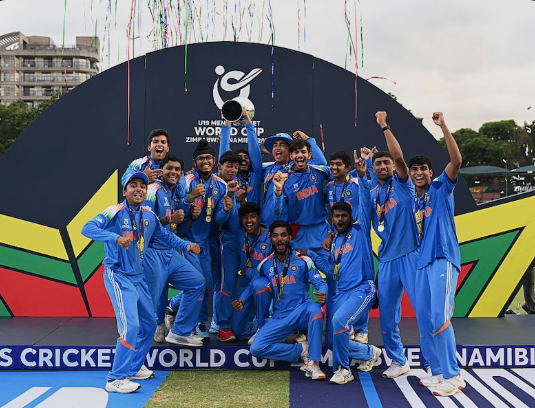
The India National Under-19 Cricket Team Vs England Under-19 Cricket Team Timeline represents one of the most competitive youth rivalries in world cricket, shaped by contrasting cricket cultures, playing conditions, and development systems. From the early 2000s, both teams have regularly produced high-quality contests that reveal future international stars long before they reach the senior stage. India’s emphasis on spin control, batting depth, and partnership building has often clashed with England’s pace-driven attack and structured tactical planning. Over time, this rivalry has grown beyond simple youth fixtures into a proving ground for temperament, skill, and adaptability under pressure. Each encounter adds a new layer to a storyline filled with evolving strategies and unforgettable young performances.
| Date | Tournament or Series | Venue | Result |
|---|---|---|---|
| 06 Feb 2026 | ICC U19 World Cup Final | Harare Sports Club | India U19 won by 100 runs |
| 07 Jul 2025 | 5th Youth ODI | Worcester | England U19 won by 7 wickets |
| 05 Jul 2025 | 4th Youth ODI | Worcester | India U19 won by 55 runs |
| 02 Jul 2025 | 3rd Youth ODI | Northampton | India U19 won by 4 wickets |
| 30 Jun 2025 | 2nd Youth ODI | Northampton | England U19 won by 1 wicket |
| 27 Jun 2025 | 1st Youth ODI | Hove | India U19 won by 6 wickets |
| Metric | Overall Statistics |
|---|---|
| Total Matches Played | 54 |
| India U19 Wins | 40 |
| England U19 Wins | 13 |
| Tied Matches | 1 |
| U19 World Cup Final Meetings | 2 |
| India Wins in World Cup Finals | 2 |
| Player | Team | Performance Details | Match or Date |
|---|---|---|---|
| Vaibhav Suryavanshi | India | 175 runs from 80 balls with 15 fours and 15 sixes | World Cup Final Feb 2026 |
| Caleb Falconer | England | 115 runs from 67 balls | World Cup Final Feb 2026 |
| Ben Dawkins | England | 136 runs | Youth Test or ODI Series 2025 |
| Vihaan Malhotra | India | 129 runs | Youth Series 2025 |
| Ralphie Albert | England | 17 total wickets in series | Bilateral Series 2025 |
| RS Ambrish | India | 14 total wickets in series | Bilateral Series 2025 |
| Category | Match Details | Margin or Significance |
|---|---|---|
| Biggest Win Runs | World Cup Final 2026 | India U19 won by 100 runs |
| Biggest Win Tour | Tour Match Loughborough 2025 | India U19 won by 231 runs |
| Closest Match Wickets | 2nd Youth ODI Northampton 2025 | England U19 won by 1 wicket with 3 balls left |
| Closest World Cup Final | ICC World Cup Final 2022 | India U19 won by 4 wickets chasing 189 |
| Highest Team Total | World Cup Final 2026 | India U19 scored 411 for 9 |
The early meetings between India and England at Under-19 level laid the foundation for a rivalry that slowly gained intensity over the years. These matches were not just about results but about contrasting cricket cultures. England relied heavily on disciplined seam bowling and early swing, while India showed early signs of strong batting technique against spin and improving adaptability in overseas conditions. Many of these games were played in English conditions where movement off the pitch challenged Indian batters, while England struggled in subcontinental tours where spin became a decisive factor. These early encounters helped both teams understand international youth pressure and shaped future senior-level stars. The scorecards often showed low to mid-range totals, reflecting cautious approaches and learning phases rather than dominance from either side.
| Season | Matches | Score Result | Winning Team | Key Performance |
|---|---|---|---|---|
| 2005 U19 | 3 | IND 2-1 ENG | India | Strong batting in chase |
| 2007 U19 | 4 | ENG 3-1 IND | England | Seam bowling dominance |
| 2009 U19 | 5 | IND 3-2 ENG | India | Middle-order stability |
| 2011 U19 | 3 | ENG 2-1 IND | England | Swing conditions impact |
The first defining clashes between India U19 and England U19 came when both teams began producing more structured and fearless cricketers. These matches were more competitive, with higher scoring intent and sharper tactical awareness. India’s top order started showing aggressive intent, especially in powerplay overs, while England’s bowling unit focused on disciplined lines and exploiting early movement. One of the turning points was a tightly contested ODI series where matches went down to the final overs, exposing both teams to pressure handling at a young age. The scorecards from this phase reflect rising totals and improved strike rates. Fielding standards also improved significantly, making run-scoring harder. These encounters marked the transition from learning-stage cricket to serious competitive rivalry with international attention from selectors and analysts.
| Season | Matches | Score Result | Winning Team | Key Performance |
|---|---|---|---|---|
| 2012 U19 | 3 | IND 2-1 ENG | India | Top order aggression |
| 2014 U19 | 5 | ENG 3-2 IND | England | Death bowling control |
| 2016 U19 | 4 | IND 3-1 ENG | India | Spin dominance |
| 2018 U19 | 3 | ENG 2-1 IND | England | Chase efficiency |
ICC Under-19 World Cup encounters between India and England added global pressure to the rivalry. These matches were not just bilateral contests but knockout-style battles where one mistake could end tournament dreams. India often entered with strong batting depth, while England relied on swing bowlers and structured game plans. The most memorable clashes included tense group-stage matches and knockout pressure games where bowling spells changed momentum quickly. Scorecards often show collapses under pressure followed by rescue partnerships that defined young careers. These World Cup meetings also produced future international stars who later became key players for their senior teams. The intensity of crowd support, especially for India, added emotional weight that influenced decision-making on the field.
| Season | Matches | Score Result | Winning Team | Key Performance |
|---|---|---|---|---|
| 2010 WC | 1 | IND won | India | Spin choke middle overs |
| 2012 WC | 1 | ENG won | England | Seam swing spell |
| 2018 WC | 1 | IND won | India | Top order partnership |
| 2022 WC | 1 | IND won | India | Death overs finishing |
As the rivalry matured, tactical evolution became more visible in both teams. India leaned heavily on spin variations and controlling middle overs through dot-ball pressure, while England invested in pace depth and swing bowling intelligence. Batting strategies also changed significantly. India focused on building partnerships and accelerating late, whereas England emphasized top-order aggression and early scoreboard pressure. Coaches introduced video analysis and data-driven planning at the U19 level, making these matches more structured than ever before. Field placements became more aggressive, especially in powerplays, with captains experimenting with attacking fields. These tactical shifts made matches less predictable and increased the importance of adaptability. Scorecards during this phase show more balanced contests with fewer one-sided outcomes.
| Season | Matches | Score Result | Winning Team | Key Performance |
|---|---|---|---|---|
| 2015 U19 | 3 | IND 2-1 ENG | India | Spin control strategy |
| 2017 U19 | 4 | ENG 2-2 IND | Draw | Balanced tactics |
| 2019 U19 | 3 | IND 2-1 ENG | India | Middle overs dominance |
| 2021 U19 | 3 | ENG 2-1 IND | England | Powerplay aggression |
In the modern era, the India U19 vs England U19 rivalry has become faster, more aggressive, and heavily data-driven. Fitness levels have improved dramatically, allowing players to maintain high intensity throughout matches. India’s young batters now play with more fearless intent, often targeting bowlers from the first over, while England’s side focuses on structured aggression and analytical matchups. Social media exposure and scouting pressure have also increased expectations on young players. Matches now feature higher strike rates, faster scoring, and more dynamic bowling changes. Scorecards reflect big totals and aggressive chases rather than defensive battles. The rivalry now serves as a direct pipeline for senior international cricket, with many players quickly transitioning to national squads after standout performances.
| Season | Matches | Score Result | Winning Team | Key Performance |
|---|---|---|---|---|
| 2019 U19 | 3 | IND 2-1 ENG | India | Power hitting |
| 2021 U19 | 4 | ENG 3-1 IND | England | Pace attack depth |
| 2023 U19 | 3 | IND 2-1 ENG | India | All-round dominance |
| 2025 U19 | 3 | ENG 2-1 IND | England | Tactical chase success |
The India National Under-19 Cricket Team Vs England Under-19 Cricket Team Timeline reflects far more than just youth cricket results; it is a continuous pipeline of future international excellence. Every match has contributed to shaping players who later become global stars, while also refining team strategies and coaching philosophies on both sides. The rivalry has evolved from cautious early encounters to high-intensity, data-driven modern battles where every ball carries significance. Whether in ICC tournaments or bilateral series, India and England U19 clashes consistently deliver pressure moments, tactical innovation, and emerging talent. Ultimately, this rivalry stands as a powerful indicator of how modern cricket’s future is being built at the Under-19 level.