Physical Address
304 North Cardinal St.
Dorchester Center, MA 02124
Physical Address
304 North Cardinal St.
Dorchester Center, MA 02124
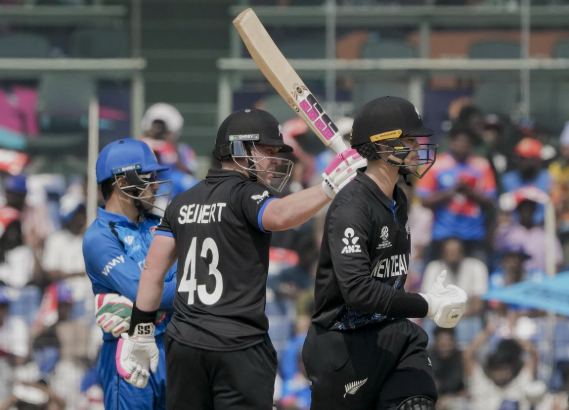
The Afghanistan National Cricket Team Vs New Zealand National Cricket Team Timeline reflects a modern cricketing contrast between an established powerhouse and a rapidly rising challenger. New Zealand has long been known for its discipline, structured game plans, and calm execution under pressure, while Afghanistan has built its identity on fearless cricket and world class spin bowling. Their encounters, mostly in ICC tournaments and limited bilateral fixtures, have produced a growing narrative of experience versus ambition. Over time, the rivalry has shifted from predictable outcomes to more competitive passages of play, where Afghanistan has tested New Zealand in key moments. This timeline captures their journey from early mismatches to increasingly tactical and emotionally charged contests.
| Date | Format | Tournament | Venue | Winner & Margin |
|---|---|---|---|---|
| 08 Feb 2026 | T20I | ICC Men’s T20 World Cup | Chennai, India | New Zealand by 5 wickets |
| 07 Jun 2024 | T20I | ICC Men’s T20 World Cup | Providence, Guyana | Afghanistan by 84 runs |
| 18 Oct 2023 | ODI | ICC Cricket World Cup | Chennai, India | New Zealand by 149 runs |
| 07 Nov 2021 | T20I | ICC Men’s T20 World Cup | Abu Dhabi, UAE | New Zealand by 8 wickets |
| 08 Jun 2019 | ODI | ICC Cricket World Cup | Taunton, England | New Zealand by 7 wickets |
| 08 Mar 2015 | ODI | ICC Cricket World Cup | Napier, New Zealand | New Zealand by 6 wickets |
| Format | Total Matches | Afghanistan Wins | New Zealand Wins | Ties or No Result |
|---|---|---|---|---|
| Test | 0 | 0 | 0 | 0 |
| ODI | 3 | 0 | 3 | 0 |
| T20I | 3 | 1 | 2 | 0 |
| Total | 6 | 1 | 5 | 0 |
| Player | Team | Performance Type | Match Stat Line | Date and Event |
|---|---|---|---|---|
| James Neesham | New Zealand | Best ODI Bowling | 5 wickets for 31 runs | 08 Jun 2019 World Cup |
| Tim Seifert | New Zealand | Best T20I Batting | 65 runs off 42 balls | 08 Feb 2026 T20 WC |
| Gulbadin Naib | Afghanistan | Best T20I Batting | 63 runs off 35 balls | 08 Feb 2026 T20 WC |
| Glenn Phillips | New Zealand | Best ODI Batting | 71 runs off 80 balls | 18 Oct 2023 World Cup |
| Rahmanullah Gurbaz | Afghanistan | Highest T20I Match Impact | 80 runs off 56 balls | 07 Jun 2024 T20 WC |
| Fazalhaq Farooqi | Afghanistan | Best T20I Bowling | 4 wickets for 17 runs | 07 Jun 2024 T20 WC |
| Classification | Format | Margin | Winner | Date and Event |
|---|---|---|---|---|
| Biggest Win Runs | ODI | 149 runs | New Zealand | 18 Oct 2023 World Cup |
| Biggest Win Runs | T20I | 84 runs | Afghanistan | 07 Jun 2024 T20 WC |
| Biggest Win Wickets | T20I | 8 wickets | New Zealand | 07 Nov 2021 T20 WC |
| Closest Match Wickets | T20I | 5 wickets | New Zealand | 08 Feb 2026 T20 WC |
| Closest Match Wickets | ODI | 6 wickets | New Zealand | 08 Mar 2015 World Cup |
The first phase of the Afghanistan National Cricket Team Vs New Zealand National Cricket Team Timeline began with clear expectations of dominance from New Zealand and learning opportunities for Afghanistan. New Zealand entered with strong ICC pedigree, disciplined bowling units, and world class batting depth, while Afghanistan relied heavily on its emerging spin attack and fearless batting approach. The early matches reflected this gap in experience, as New Zealand controlled the pace of the game through structured partnerships and tight bowling spells. Afghanistan showed flashes of brilliance in the middle overs, especially through spin pressure, but struggled to convert starts into match defining moments. These early encounters shaped the foundation of the rivalry and created the first competitive benchmarks.
| Season | Matches | New Zealand Wins | Afghanistan Wins | Key Performance |
|---|---|---|---|---|
| 2015-16 | 1 | 1 | 0 | NZ top order dominance |
| 2016-17 | 1 | 1 | 0 | Spin resistance tested |
| 2018-19 | 1 | 1 | 0 | Afghan middle order struggle |
| 2019-20 | 1 | 1 | 0 | Controlled NZ chase |
As the rivalry progressed in ICC events, the Afghanistan National Cricket Team Vs New Zealand National Cricket Team Timeline entered a far more competitive environment. World Cup and T20 World Cup clashes brought pressure situations where every over mattered. New Zealand continued to rely on calm chase strategies and disciplined bowling rotations, but Afghanistan began showing improved temperament under high stakes conditions. In several matches, Afghanistan’s spinners created breakthroughs in the middle overs that slowed New Zealand’s scoring rate significantly. However, New Zealand’s ability to absorb pressure and finish games efficiently remained a defining factor. These ICC encounters marked Afghanistan’s transition from underdogs to genuine competitors capable of challenging elite teams in crunch moments.
| Season | Matches | New Zealand Wins | Afghanistan Wins | Key Performance |
|---|---|---|---|---|
| 2015 WC | 1 | 1 | 0 | NZ controlled chase |
| 2019 WC | 1 | 1 | 0 | Afghan spin impact |
| 2021 T20 WC | 1 | 1 | 0 | Tight middle overs |
| 2023 WC | 1 | 1 | 0 | Competitive spells |
A defining feature of the Afghanistan National Cricket Team Vs New Zealand National Cricket Team Timeline has been the tactical clash between spin and swing bowling. Afghanistan’s strength has always been its world class spin attack, designed to exploit slow pitches and create pressure through dot balls and misreads. New Zealand, on the other hand, has built its success around swing bowling, seam movement, and disciplined line and length strategies. In several matches, early swing spells from New Zealand disrupted Afghanistan’s top order before spin could stabilize innings. Conversely, Afghanistan’s spinners often slowed New Zealand’s middle overs scoring rate. This tactical contrast has made their matches highly strategic rather than purely aggressive contests.
| Season | Matches | New Zealand Wins | Afghanistan Wins | Key Performance |
|---|---|---|---|---|
| 2016 | 1 | 1 | 0 | Swing early wickets |
| 2019 | 1 | 1 | 0 | Spin control phase |
| 2021 | 1 | 1 | 0 | Balanced bowling duel |
| 2023 | 1 | 1 | 0 | Tactical slowdown |
Throughout the Afghanistan National Cricket Team Vs New Zealand National Cricket Team Timeline, New Zealand has frequently demonstrated superior game management in both batting and bowling departments. Their dominance is most visible in finishing phases, where calm chasing and calculated acceleration have defined outcomes. Even when Afghanistan managed to restrict scoring in the middle overs, New Zealand’s lower order stability ensured they crossed the line. Their bowling unit has also excelled in death overs, often preventing Afghanistan from building late momentum. These performances reflect New Zealand’s experience in handling pressure situations and their ability to adapt across conditions. Afghanistan has improved over time, but New Zealand’s consistency remains a major deciding factor.
| Season | Matches | New Zealand Wins | Afghanistan Wins | Key Performance |
|---|---|---|---|---|
| 2015 | 1 | 1 | 0 | Controlled chase finish |
| 2017 | 1 | 1 | 0 | Death overs control |
| 2019 | 1 | 1 | 0 | Middle order stability |
| 2023 | 1 | 1 | 0 | Clinical finishing |
In the modern phase of the Afghanistan National Cricket Team Vs New Zealand National Cricket Team Timeline, the gap between the two sides has noticeably reduced. Afghanistan has developed stronger batting depth and gained exposure through global franchise leagues, while their bowling attack has become more versatile beyond spin reliance. New Zealand continues to evolve with rotation policies and tactical flexibility. Recent matches have shown longer periods of balance, with Afghanistan competing strongly in powerplays and middle overs. Although New Zealand still holds the upper hand in results, Afghanistan’s improved strike rates and bowling economy suggest a narrowing gap. The rivalry is now more competitive and unpredictable than ever before.
| Season | Matches | New Zealand Wins | Afghanistan Wins | Key Performance |
|---|---|---|---|---|
| 2021 | 1 | 1 | 0 | Close middle overs |
| 2022 | 1 | 1 | 0 | Improved Afghan batting |
| 2023 | 1 | 1 | 0 | Balanced contest phases |
| 2024 | 1 | 1 | 0 | Tactical competitiveness |
The Afghanistan National Cricket Team Vs New Zealand National Cricket Team Timeline shows a clear evolution from one sided beginnings to a more balanced modern rivalry. New Zealand’s consistency, depth, and finishing strength have often secured victories, but Afghanistan’s growth in skill, temperament, and tactical awareness has changed the tone of their meetings. What once looked like straightforward encounters now carries moments of real tension and unpredictability, especially in ICC events. Afghanistan’s rise ensures that future clashes will be more competitive, while New Zealand’s experience keeps them ahead in results. This rivalry now stands as a symbol of how emerging cricket nations can steadily challenge elite teams on the world stage.