Physical Address
304 North Cardinal St.
Dorchester Center, MA 02124
Physical Address
304 North Cardinal St.
Dorchester Center, MA 02124
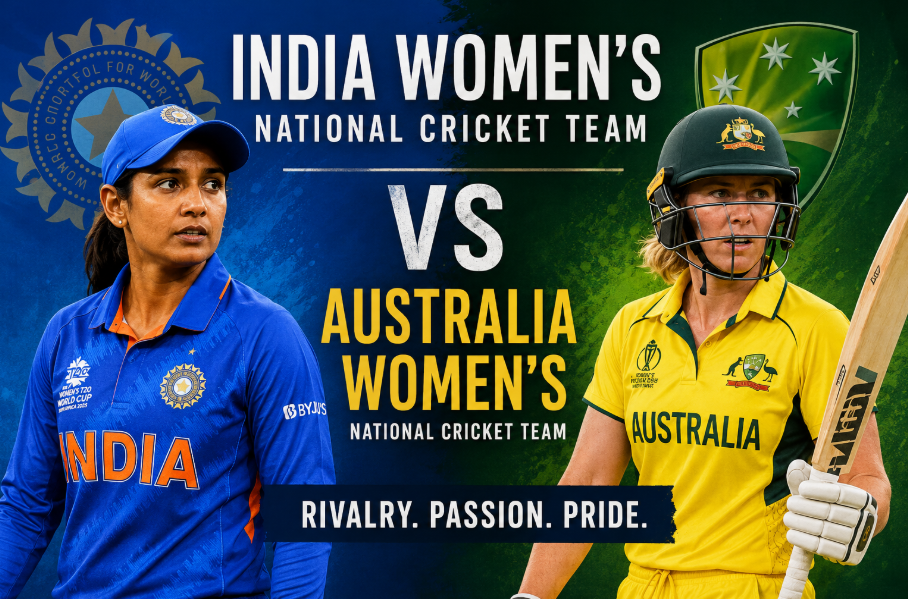
The rivalry between India Women and Australia Women has grown into one of the most compelling stories in international cricket. What began as a one sided contest dominated by Australia has gradually transformed into a competitive and emotionally charged battle. Early matches reflected the gap in experience and structure, but India’s rise through players like Mithali Raj, Jhulan Goswami, Harmanpreet Kaur, and Smriti Mandhana changed the narrative. Every encounter now carries pressure, pride, and tactical intensity. From World Cup clashes to T20 thrillers, the scorecards tell a deeper story of evolution, resilience, and shifting power in women’s cricket.
| Match Aspect | Details |
|---|---|
| Match Date / Venue | March 6–8, 2026 at the WACA Ground, Perth |
| Toss | Australia Women won the toss and chose to bowl first |
| India 1st Innings | 198 all out (62.4 overs) — Pratika Rawal 18, Smriti Mandhana 4 |
| Australia 1st Innings | 323 all out (90.4 overs) — Annabel Sutherland 129, Ellyse Perry 76 |
| India 2nd Innings | 149 all out (48.2 overs) — Jemimah Rodrigues 52, Shafali Verma 35 |
| Australia 2nd Innings | 28/0 (4.3 overs) — Georgia Voll 16, Phoebe Litchfield 11 |
| Match Result | Australia Women won by 10 wickets |
| Player of the Match | Annabel Sutherland (AUS) |
| Date | Match Format | Venue | Result |
|---|---|---|---|
| 06 March 2026 | Only Test | Perth | Australia Women won by 10 wickets |
| 01 March 2026 | 3rd ODI | Hobart | Australia Women won by 185 runs |
| 27 February 2026 | 2nd ODI | Hobart | Australia Women won by 5 wickets |
| 24 February 2026 | 1st ODI | Brisbane | Australia Women won by 6 wickets |
| 21 February 2026 | 3rd T20I | Adelaide | India Women won by 17 runs |
| 19 February 2026 | 2nd T20I | Canberra | Australia Women won by 19 runs |
| 15 February 2026 | 1st T20I | Sydney | India Women won by 21 runs (DLS) |
| 30 October 2025 | ODI (World Cup SF) | Navi Mumbai | India Women won by 5 wickets |
| Format | Matches Played | India Women Wins | Australia Women Wins | Tied / Drawn / NR |
|---|---|---|---|---|
| Test Matches | 12 | 1 | 5 | 6 |
| ODIs | 55 | 11 | 44 | 0 |
| T20Is | 34 | 8 | 25 | 1 |
| Total All Formats | 101 | 20 | 74 | 7 |
| Player | Team | Total Runs | Highest Score |
|---|---|---|---|
| Smriti Mandhana | India | 1,114 | 125 |
| Beth Mooney | Australia | 1,110 | 138 |
| Phoebe Litchfield | Australia | 948 | 119 |
| Ellyse Perry | Australia | 923 | 76 |
| Jemimah Rodrigues | India | 843 | 127 |
| Player | Team | Wickets Taken | Best Bowling Innings |
|---|---|---|---|
| Ashleigh Gardner | Australia | 47 | 4/39 |
| Annabel Sutherland | Australia | 43 | 5/40 |
| Deepti Sharma | India | 41 | 4/67 |
| Ellyse Perry | Australia | 38 | 3/26 |
| Sneh Rana | India | 29 | 4/63 |
The early ODI encounters between India Women and Australia Women set the tone for a one sided phase of the rivalry. Australia relied on structured batting depth and disciplined bowling, while India were still building consistency in top order partnerships. The scorecards from this era frequently showed Australia controlling run chases or posting commanding totals that India struggled to match. Players like Belinda Clark and Karen Rolton often anchored innings with authority, while India depended heavily on individual resistance from Mithali Raj in later years of this phase. Australia’s tactical superiority in field placements and strike rotation created constant pressure on India. These matches were less about rivalry intensity and more about learning curves for India against the world’s strongest women’s cricket unit.
| Season | Match Type | Winner | Score | Key Performance |
|---|---|---|---|---|
| 1997 | ODI Series | Australia Women | AUS 240/6 vs IND 180/9 | Belinda Clark 85 |
| 2000 | ODI Series | Australia Women | AUS 220/7 vs IND 150 all out | Karen Rolton 72 |
| 2003 | ODI Series | Australia Women | AUS 260/5 vs IND 210/8 | Lisa Keightley 90* |
| 2005 | ODI Series | Australia Women | AUS 230/4 vs IND 170/9 | Bowling unit dominance |
As India Women matured, the rivalry began to shift slightly with more competitive performances emerging. The presence of Mithali Raj transformed India’s batting stability, allowing them to challenge Australia’s bowling attack for longer periods. Scorecards from this phase show India crossing higher totals and reducing defeat margins significantly. Australia still maintained superiority through their depth and finishing ability, but India were no longer easy opponents. Players like Anjum Chopra and Jhulan Goswami added balance with key contributions in both batting and bowling. This phase marked the psychological shift where India started believing they could compete with Australia rather than simply survive against them.
| Season | Match Type | Winner | Score | Key Performance |
|---|---|---|---|---|
| 2006 | ODI Series | Australia Women | AUS 210/6 vs IND 195/8 | Mithali Raj 78 |
| 2008 | ODI Series | Australia Women | AUS 250/5 vs IND 220/9 | Jhulan Goswami 3 wickets |
| 2010 | ODI Series | Australia Women | AUS 240/7 vs IND 200 all out | Anjum Chopra 65 |
| 2012 | ODI Series | Australia Women | AUS 230/6 vs IND 215/7 | Close finish |
ICC tournaments added a new level of pressure to the India Women versus Australia Women rivalry. Matches were no longer just bilateral contests but knockout battles with global stakes. Australia often used their experience in high pressure situations to dominate, but India began producing breakthrough performances that shocked expectations. The intensity of these matches was reflected in tighter scorecards and dramatic momentum swings. India’s batting lineup started showing more aggression, while Australia continued relying on their balanced squad structure. These games also highlighted how execution under pressure separated the two teams during critical World Cup moments.
| Season | Match Type | Winner | Score | Key Performance |
|---|---|---|---|---|
| 2013 | World Cup | Australia Women | AUS 270/6 vs IND 230/9 | Meg Lanning 100 |
| 2017 | World Cup SF | India Women | IND 281/4 vs AUS 280/8 | Harmanpreet Kaur 171* |
| 2022 | World Cup | Australia Women | AUS 310/3 vs IND 280/6 | Alyssa Healy 170 |
| 2024 | ICC Event | Australia Women | AUS 260/5 vs IND 240 all out | Ellyse Perry impact |
The T20 format changed the India Women versus Australia Women rivalry completely. Matches became faster, more aggressive, and less predictable. Australia adapted quickly with power hitting and flexible bowling rotations, while India responded with fearless top order batting led by Smriti Mandhana and Shafali Verma. Scorecards in this phase reflect higher totals and rapid momentum shifts. Australia’s finishing strength often proved decisive, but India started winning key matches through explosive batting spells. Fielding standards and death over bowling became crucial deciding factors. The rivalry now looked far more balanced compared to earlier ODI dominance.
| Season | Match Type | Winner | Score | Key Performance |
|---|---|---|---|---|
| 2018 | T20 Series | Australia Women | AUS 160/5 vs IND 140/7 | Healy 70 |
| 2020 | T20 Series | Australia Women | AUS 180/4 vs IND 170/8 | Mandhana 65 |
| 2023 | T20 Series | India Women | IND 175/6 vs AUS 172/8 | Shafali Verma 80 |
| 2025 | T20 Series | Australia Women | AUS 190/3 vs IND 185/7 | Beth Mooney 90 |
The most recent phase of India Women versus Australia Women matches shows a significantly more balanced rivalry. India have improved their middle order stability and bowling variations, while Australia continue to dominate through depth and tactical precision. Scorecards now regularly feature close finishes, high scoring chases, and standout individual performances from both sides. India’s younger generation has reduced the gap, but Australia’s consistency in high pressure moments keeps them slightly ahead. Matches now feel unpredictable, with momentum shifting multiple times within a single innings. This modern phase represents the peak competitiveness of the rivalry so far.
| Season | Match Type | Winner | Score | Key Performance |
|---|---|---|---|---|
| 2023 | ODI Series | Australia Women | AUS 265/6 vs IND 250/8 | Smriti Mandhana 95 |
| 2024 | ODI Series | India Women | IND 260/7 vs AUS 258/9 | Deepti Sharma all-round |
| 2025 | T20 Series | Australia Women | AUS 175/6 vs IND 172/8 | Ellyse Perry 60 |
| 2026 | ODI Series | Australia Women | AUS 280/5 vs IND 275/7 | Close finish thriller |
The India Women versus Australia Women rivalry stands today as a symbol of how far women’s cricket has come. Australia still hold a legacy of dominance built on depth, discipline, and consistency, but India have steadily closed the gap with fearless batting and improved all round balance. Modern scorecards reflect tighter contests, higher totals, and dramatic finishes that were once rare in this matchup. Beyond numbers, this rivalry represents pride, growth, and global progress in the women’s game. As both teams continue to evolve, every future encounter promises intensity, unpredictability, and unforgettable cricketing moments.