Physical Address
304 North Cardinal St.
Dorchester Center, MA 02124
Physical Address
304 North Cardinal St.
Dorchester Center, MA 02124
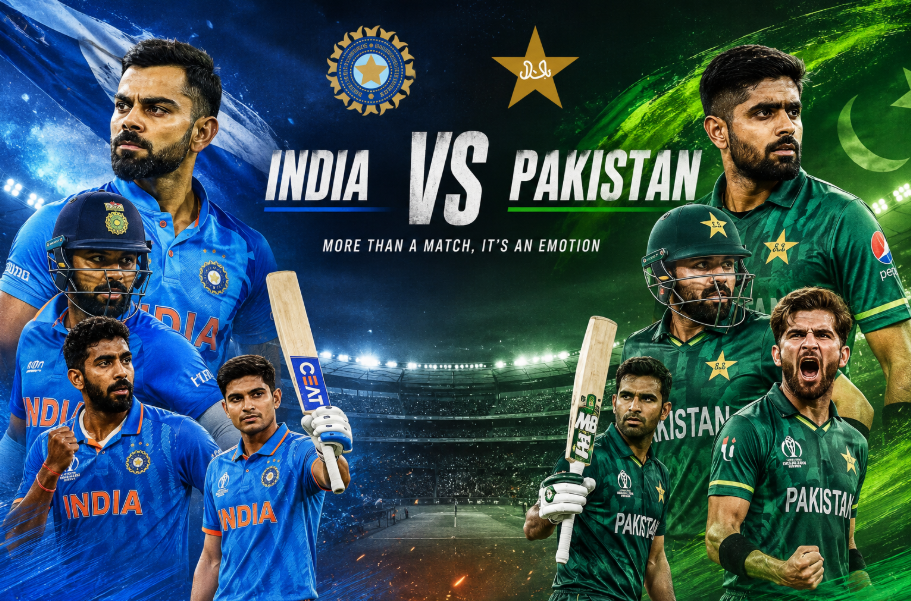
The rivalry between the India National Cricket Team and Pakistan National Cricket Team is widely regarded as the most intense contest in world cricket. Every match between these two sides goes beyond the boundary rope, shaped by history, emotion, and immense national expectation. From their earliest encounters in the 1950s to modern ICC showdowns, the rivalry has produced unforgettable scorecards, dramatic collapses, and iconic match-winning performances. Fans on both sides treat every ball like a turning point. This introduction explores how cricket became a stage for pride, pressure, and passion whenever India and Pakistan face each other.
| Team | Innings | Score | Top Performers |
|---|---|---|---|
| India | Batting | 175/7 (20 overs) | Ishan Kishan: 77 runs, Surya Kumar Yadav: 34 runs |
| Pakistan | Bowling | 175/7 (20 overs) | Saim Ayub: 3 wickets, Shaheen Afridi: 2 wickets |
| Pakistan | Batting | 114 all out (18.2 overs) | Usman Khan: 44 runs, Fakhar Zaman: 22 runs |
| India | Bowling | 114 all out (18.2 overs) | Hardik Pandya: 2 wickets, Jasprit Bumrah: 2 wickets |
| Date | Tournament | Format | Result |
|---|---|---|---|
| Feb 15, 2026 | ICC Men’s T20 World Cup | T20I | India won by 61 runs |
| Sep 28, 2025 | Asia Cup Final | T20I | India won by 5 wickets |
| Sep 21, 2025 | Asia Cup Super 4s | T20I | India won by 6 wickets |
| Sep 14, 2025 | Asia Cup Group Stage | T20I | India won by 7 wickets |
| Feb 23, 2025 | ICC Champions Trophy | ODI | India won by 6 wickets |
| Format | Total Played | India Wins | Pakistan Wins | No Result or Draw |
|---|---|---|---|---|
| Test Matches | 59 | 9 | 12 | 38 |
| One Day Internationals | 135 | 58 | 73 | 4 |
| Twenty20 Internationals | 15 | 12 | 3 | 0 |
| All Formats Combined | 209 | 79 | 88 | 42 |
| Player | Team | Format | Total Runs |
|---|---|---|---|
| Sachin Tendulkar | India | ODI | 2526 |
| Inzamam-ul-Haq | Pakistan | ODI | 2403 |
| Javed Miandad | Pakistan | Test | 2228 |
| Sunil Gavaskar | India | Test | 2089 |
| Virat Kohli | India | T20I | 492 |
| Player | Team | Format | Total Wickets |
|---|---|---|---|
| Wasim Akram | Pakistan | ODI | 60 |
| Anil Kumble | India | ODI | 54 |
| Aaqib Javed | Pakistan | ODI | 54 |
| Hardik Pandya | India | T20I | 15 |
| Umar Gul | Pakistan | T20I | 11 |
The rivalry between the India National Cricket Team and Pakistan National Cricket Team is not just about cricket but emotion, history, and identity. From the moment both teams first met after partition, every match carried political and cultural weight. Players walked into the field knowing millions were watching with expectations far beyond sport. Early encounters were cautious, shaped by fear of collapse and pressure rather than aggression. Even simple singles felt like battles. Media on both sides built narratives of pride and redemption. This created a foundation where every scorecard became a national talking point rather than just a match record.
| Season | Match Type | Winning Team | Key Performance | Result Impact |
|---|---|---|---|---|
| 1952 | Test | India | Vinoo Mankad 5 wickets | India dominance begins |
| 1978 | ODI | Pakistan | Majid Khan 50+ | Balanced rivalry starts |
| 1985 | ODI | India | Gavaskar steady 60 | India control phase |
| 1986 | Austral-Asia Cup | Pakistan | Javed Miandad last-ball six | Historic turning moment |
Early matches between India National Cricket Team and Pakistan National Cricket Team were slow, tactical, and deeply cautious. Both sides prioritized survival over aggression. Batters focused on technique, while bowlers tried to exploit pressure rather than pace. The scorecards from this era reflect low scoring matches, often decided by small margins. What stood out was not dominance but discipline. Players like Sunil Gavaskar and Imran Khan shaped early identity of this rivalry. Each innings felt like a test of patience rather than skill alone. These encounters laid the groundwork for a rivalry that would later become explosive and emotionally charged.
| Season | Match Type | Winning Team | Key Performance | Result Impact |
|---|---|---|---|---|
| 1978 | ODI | Pakistan | Imran Khan 3 wickets | Pakistan edge |
| 1979 | Test | Draw | Gavaskar 100+ | Balanced phase |
| 1982 | ODI | India | Kapil Dev all round | India rise |
| 1984 | Test | Pakistan | Qasim Umar 70+ | Pakistan resilience |
In ICC tournaments, the India National Cricket Team built a psychological advantage over Pakistan National Cricket Team, especially in World Cups. Pakistan entered many matches with strong squads but struggled under pressure. India’s ability to handle big-stage nerves became the defining factor. Batters like Sachin Tendulkar delivered consistent performances in crucial matches. Pakistan often collapsed at key moments despite strong starts. These scorecards show India’s dominance not just in runs but in mental control. The pressure of knockout stages often tilted momentum heavily in India’s favor, creating a long-standing World Cup narrative.
| Season | Match Type | Winning Team | Key Performance | Result Impact |
|---|---|---|---|---|
| 1992 | World Cup | India | Tendulkar 50+ | Psychological edge |
| 1996 | World Cup | India | Jadeja fast runs | Knockout pressure |
| 1999 | World Cup | India | Kumble 4 wickets | India dominance |
| 2003 | World Cup | India | Sehwag explosive start | One-sided match |
The late 1990s and early 2000s marked a shift as Pakistan National Cricket Team began challenging India National Cricket Team more aggressively. Bowlers like Wasim Akram and Shoaib Akhtar introduced fear into batting lineups. Pakistan’s strategy became pace-heavy and attack-driven. India responded with technical batting depth and spin variations. Matches became more balanced, with scorecards showing closer finishes and higher run rates. This era redefined rivalry intensity, as neither team dominated fully. Momentum swung frequently, making every over critical. Fans witnessed unpredictable outcomes and dramatic collapses on both sides.
| Season | Match Type | Winning Team | Key Performance | Result Impact |
|---|---|---|---|---|
| 1998 | Test | Pakistan | Wasim Akram 5 wickets | Pakistan control |
| 2004 | ODI | India | Dravid anchor 50+ | India comeback |
| 2005 | ODI | Pakistan | Afridi explosive 70 | Pakistan win |
| 2006 | Test | Draw | Balanced bowling | Even rivalry |
In the T20 era, the rivalry between India National Cricket Team and Pakistan National Cricket Team became faster, sharper, and more unpredictable. Matches often went down to the last over or even super overs. Batters played fearless cricket, while bowlers relied on variations and death-over skills. Players like Virat Kohli and Babar Azam added elegance and consistency to the contest. Scorecards began showing high strike rates and explosive finishes. Tactical decisions from captains played a bigger role than ever. One over could change the entire match outcome, making every ball a pressure moment.
| Season | Match Type | Winning Team | Key Performance | Result Impact |
|---|---|---|---|---|
| 2007 | T20 WC | India | Bowlers defend low score | Historic win |
| 2012 | T20 | Pakistan | Nasir Jamshed 50+ | Pakistan chase |
| 2016 | T20 WC | India | Kohli masterclass | India chase |
| 2021 | T20 WC | Pakistan | Rizwan Babar partnership | Dominant win |
Some matches between India National Cricket Team and Pakistan National Cricket Team are etched permanently in cricket memory. The 2007 T20 World Cup thriller, 2011 World Cup semi-final pressure atmosphere, and 2017 Champions Trophy final all reshaped rivalry perception. These matches were not just games but emotional events watched by billions. Scorecards from these games show turning points where momentum shifted in single overs. Bowlers became heroes, and batters carried national hopes. Every mistake was magnified. Every boundary triggered massive emotional reactions. These matches defined careers and created legends.
| Season | Match Type | Winning Team | Key Performance | Result Impact |
|---|---|---|---|---|
| 2007 | T20 WC | India | Bowl-out win | Historic thriller |
| 2011 | World Cup | India | Tendulkar 80+ | Semi-final pressure |
| 2017 | CT Final | Pakistan | Fakhar Zaman 100+ | Big final win |
| 2022 | T20 WC | India | Kohli 82* | Iconic chase |
The rivalry between the India National Cricket Team and Pakistan National Cricket Team stands unmatched in cricket history for its intensity and emotional depth. Across decades, the scorecards have recorded shifting dominance, legendary individual performances, and moments that defined generations. Whether it was World Cup pressure, Asia Cup battles, or modern T20 thrillers, every match carried unmatched tension. Beyond statistics, this rivalry reflects pride, identity, and unforgettable sporting drama. As both teams continue to evolve, one truth remains constant: whenever India and Pakistan meet on the cricket field, the world stops to watch a contest that is never just a game.