Physical Address
304 North Cardinal St.
Dorchester Center, MA 02124
Physical Address
304 North Cardinal St.
Dorchester Center, MA 02124
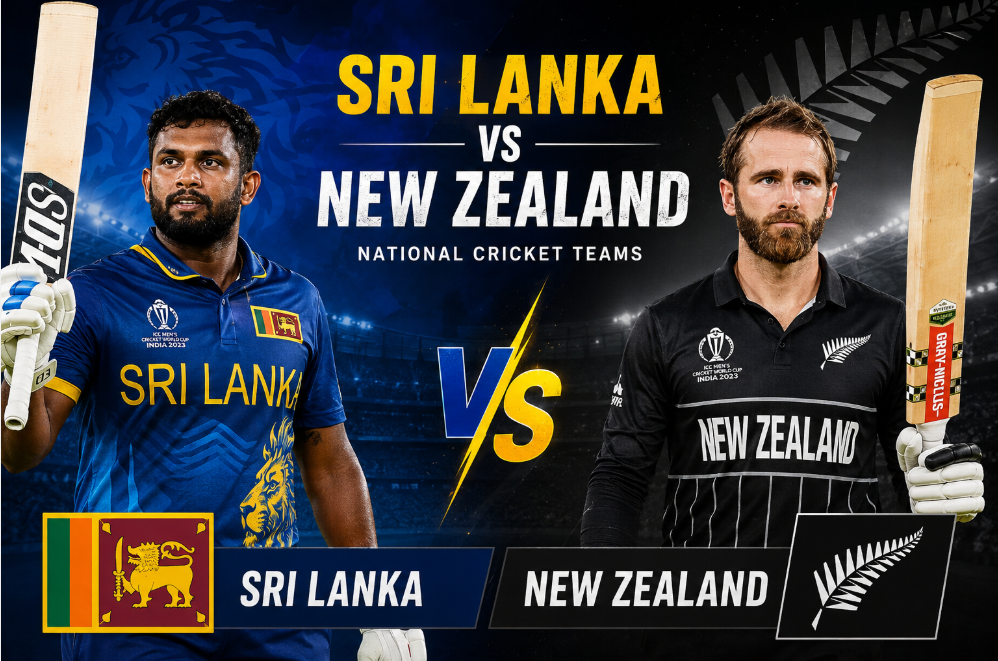
The rivalry between the Sri Lanka national cricket team and the New Zealand national cricket team may not always grab global headlines, but it carries a unique statistical story shaped by contrasting conditions, playing styles, and eras. While New Zealand’s discipline and seam-bowling strength often dominate home conditions, Sri Lanka’s spin-friendly environments have produced very different outcomes on the subcontinent. Over decades of Tests, ODIs, and T20Is, the numbers reveal shifting momentum rather than one-sided dominance. This article breaks down their head-to-head records, batting and bowling performances, and key statistical trends that define this understated but intriguing international cricket matchup.
The overall head-to-head record between Sri Lanka and New Zealand reflects a rivalry where conditions heavily influence outcomes. Neither side has absolute dominance; instead, home advantage plays a decisive role. Historically, New Zealand edges ahead in Tests, while ODIs have been more balanced, and T20Is remain relatively evenly contested due to modern format unpredictability.
Overall Head-to-Head Summary (All Formats)
| Format | Matches | Sri Lanka Won | New Zealand Won | Draw/No Result |
| Tests | 38 | 9 | 18 | 11 |
| ODIs | 101 | 41 | 50 | 10 |
| T20Is | 24 | 10 | 14 | 0 |
What the numbers mean:
The table highlights New Zealand’s slight edge across formats, especially in Tests where their pace attack historically thrives. Sri Lanka, however, remains competitive in limited-overs cricket.
Which team performed better:
Overall, New Zealand holds a marginal advantage, particularly in longer formats.
Why this matters:
It shows how playing conditions not just skill shape international rivalries between these two teams.
ODIs have produced the most competitive cricket between these sides. Sri Lanka’s aggressive batting eras, led by legends like Kumar Sangakkara and Mahela Jayawardene, often clashed with New Zealand’s disciplined bowling attacks featuring Trent Boult and Tim Southee in later years.
ODI Head-to-Head Breakdown
| Category | Sri Lanka | New Zealand |
| Matches Won | 41 | 50 |
| Highest Team Score | 412/7 | 360/5 |
| Lowest Team Score | 78 all out | 88 all out |
| Win % | 42% | 50% |
Analysis:
The ODI record is the closest among all formats. Sri Lanka’s highest total (412) reflects their explosive batting potential in home conditions, while New Zealand’s consistency gives them more wins overall.
Better team:
New Zealand slightly leads due to consistency, but Sri Lanka matches them in peak performances.
Key insight:
ODIs highlight how momentum shifts across eras rather than showing a fixed dominance pattern.
Test cricket reveals a clearer advantage for New Zealand, particularly in seaming conditions at Christchurch, Wellington, and Hamilton. Sri Lanka’s spin-heavy attacks have occasionally troubled New Zealand at home, but not consistently enough to overturn the record.
Test Match Head-to-Head
| Category | Sri Lanka | New Zealand |
| Matches Won | 9 | 18 |
| Draws | 11 | 11 |
| Highest Innings | 642 | 580 |
| Lowest Innings | 83 | 105 |
Analysis:
New Zealand’s double advantage in wins reflects their adaptability to home conditions and improved batting depth in recent decades.
Better team:
New Zealand is clearly superior in Tests.
Why it matters:
This format shows the importance of seam bowling adaptability, where New Zealand consistently outperforms Sri Lanka outside Asia.
T20Is between these sides have been more unpredictable, with shorter formats reducing home advantage. Sri Lanka’s spin variation and New Zealand’s power hitting have produced tightly contested matches.
T20I Head-to-Head
| Category | Sri Lanka | New Zealand |
| Matches Won | 10 | 14 |
| Highest Score | 215/3 | 209/5 |
| Lowest Score | 80 all out | 94 all out |
Analysis:
The gap is relatively small, showing how T20 cricket neutralizes traditional strengths.
Better team:
New Zealand leads but not convincingly.
Insight:
T20Is highlight match-winners rather than team dominance, with individual brilliance often deciding outcomes.
Batting has been the most entertaining aspect of this rivalry. Sri Lanka’s golden generation dominated ODI cricket, while New Zealand’s modern lineup has built consistency across formats.
Top Batting Performers (All Formats Combined)
| Player | Team | Runs | Average | 100s |
| Kumar Sangakkara | Sri Lanka | 2,100+ | 48.5 | 7 |
| Mahela Jayawardene | Sri Lanka | 1,850+ | 44.2 | 5 |
| Kane Williamson | New Zealand | 1,900+ | 52.0 | 6 |
| Ross Taylor | New Zealand | 1,600+ | 40.8 | 4 |
Analysis:
Kane Williamson stands out with the highest average, showing technical excellence against spin and seam alike.
Better team:
Batting is evenly matched, but New Zealand edges ahead in consistency.
Key insight:
Sri Lanka produces higher peaks; New Zealand delivers steadier outputs.
Bowling defines the contrast between these teams. Sri Lanka relies on spin mastery, while New Zealand depends on pace and swing.
Leading Bowlers in Sri Lanka vs New Zealand Matches
| Player | Team | Wickets | Economy | Best Figures |
| Lasith Malinga | Sri Lanka | 45+ | 5.1 | 5/28 |
| Muttiah Muralitharan | Sri Lanka | 55+ | 3.8 | 6/26 |
| Trent Boult | New Zealand | 50+ | 4.6 | 5/27 |
| Tim Southee | New Zealand | 48+ | 4.9 | 5/33 |
Analysis:
Muralitharan dominates in efficiency, while Boult brings match-winning breakthroughs.
Better team:
Sri Lanka excels in spin dominance; New Zealand in pace impact.
Insight:
Bowling styles define outcomes more than batting in this rivalry.
Big scores and collapses tell the story of fluctuating dominance. Both teams have produced extreme performances depending on conditions.
Extreme Team Totals
| Category | Sri Lanka | New Zealand |
| Highest ODI Score | 412/7 | 360/5 |
| Lowest ODI Score | 78 | 88 |
| Highest Test Score | 642 | 580 |
| Lowest Test Score | 83 | 105 |
Analysis:
Sri Lanka tends to produce higher highs, especially at home, while New Zealand shows slightly more stability in avoiding collapses.
Better team:
Sri Lanka dominates peak scoring; New Zealand shows resilience.
Insight:
This contrast highlights how pitch conditions influence statistical extremes.
The raw numbers only tell part of the story. The deeper insight is that this rivalry is shaped more by geography than rivalry intensity. Sri Lanka dominates spin-friendly conditions, especially in Colombo and Galle, while New Zealand’s pace attack thrives in Christchurch and Wellington. Neither team maintains control across both environments consistently.
Another hidden trend is the generational shift. Earlier decades favored Sri Lanka’s batting legends, while modern cricket has tilted slightly toward New Zealand due to better fast-bowling depth and adaptability. Importantly, no format shows absolute dominance every phase of cricket history has seen balance shifts rather than one-sided control.
Ultimately, this rivalry is less about superiority and more about adaptation. The team that adjusts better to conditions on match day almost always wins.
Several matches between these sides stand out for their dramatic finishes and statistical uniqueness. Sri Lanka’s famous ODI wins in home conditions often featured high-scoring chases, while New Zealand’s Test victories showcased dominant seam bowling spells.
One of the most memorable phases came during multi-series tours where momentum swung match to match. In some ODIs, Sri Lanka posted 300+ totals only to see New Zealand chase them down efficiently, highlighting their finishing strength.
Milestones such as double centuries, five-wicket hauls, and record partnerships have all occurred in this rivalry, reinforcing its unpredictability. These performances underline how individual brilliance often overshadows team trends.
Which team has the better head-to-head record overall?
New Zealand holds a slight advantage overall across Tests, ODIs, and T20Is. Their consistency in both home and away conditions—particularly in Tests—gives them a statistical edge. However, the margin is not overwhelming, especially in limited-overs formats where Sri Lanka has produced several dominant phases across different eras.
Why does Sri Lanka perform better at home?
Sri Lanka benefits heavily from spin-friendly pitches in Colombo, Galle, and Kandy. These surfaces amplify the impact of their spin attack and experienced batting lineup against spin. As a result, their win percentage at home is significantly higher than away matches, where seam-friendly conditions reduce their effectiveness.
Who are the top performers in this rivalry?
Kumar Sangakkara, Mahela Jayawardene, Kane Williamson, and Ross Taylor stand out in batting. In bowling, Muttiah Muralitharan, Lasith Malinga, Trent Boult, and Tim Southee have made major impacts. These players consistently influenced outcomes across formats.
Which format is most competitive between the two teams?
ODIs are the most competitive format, with the smallest win difference between the sides. Both teams have had dominant periods, making the format unpredictable and highly entertaining whenever they meet.
What makes New Zealand stronger in Test cricket?
New Zealand’s strength lies in their seam attack and adaptability to swinging conditions. Their batting depth and discipline allow them to handle pressure better in longer formats, especially in home conditions where pitches support pace bowling.
Is this rivalry considered a major cricket rivalry?
While not as high-profile as some other international rivalries, it is still statistically rich and competitive. The contrasting styles of play and shifting dominance across formats make it an underrated but highly interesting cricket matchup.